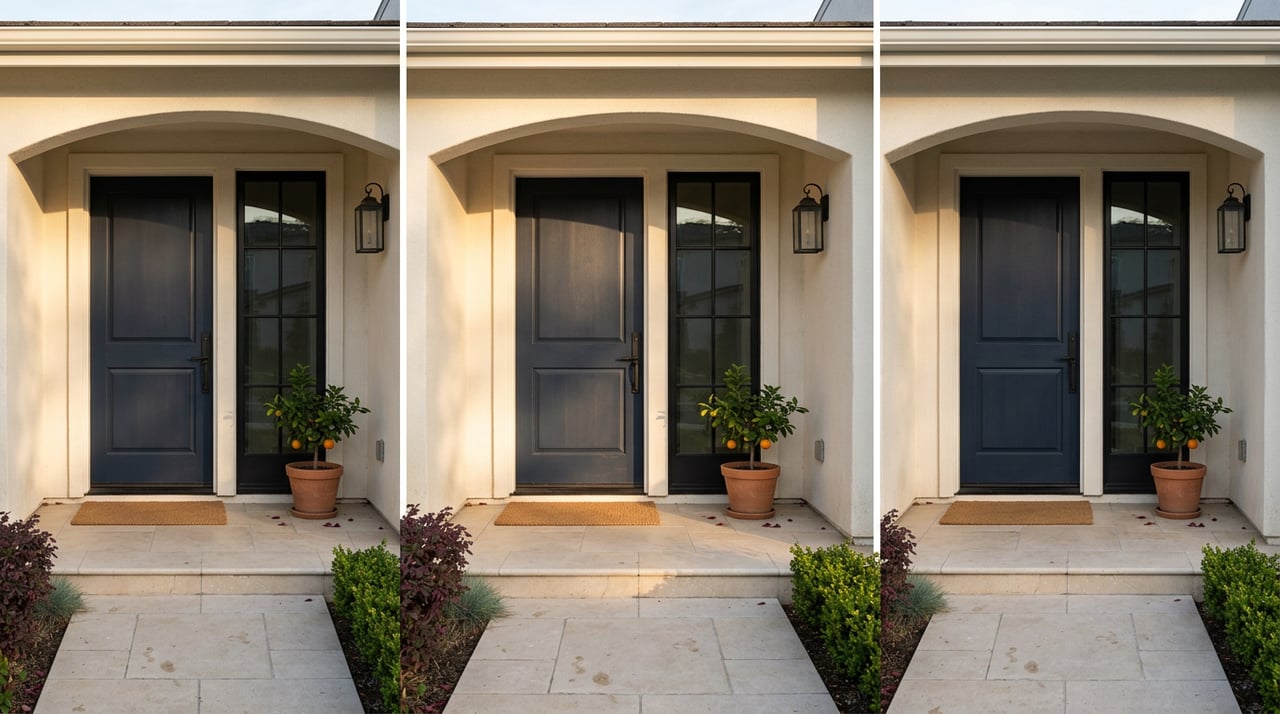
Two pieces of mail eventually reach the owner of a Mills Act home in San Jose. One is a property tax bill that can run 20 to 70 percent below what a comparable, non-historic house down the street pays, according to the Santa Clara County Assessor's office. The other is a notice from the city's Historic Landmarks Commission, a reminder that any exterior work on the house, including a paint color change or a new fence, requires a Historic Preservation permit before a contractor can start. Buyers shopping in Naglee Park, Shasta Hanchett Park, or Palm Haven usually hear about the first envelope from a listing agent. The second one is what actually determines whether the first was worth opening.
The listings sell the charm, not the paperwork
Walk the blocks east of downtown and the housing stock explains itself. Naglee Park's inventory runs to 1910s Craftsman bungalows, Tudor Revival houses built as the neighborhood filled in, and at least one 1928 Spanish Hacienda-style estate sitting on nearly two-thirds of an acre. A few streets over, Shasta Hanchett Park holds what is likely San Jose's largest concentration of 1910 to 1920 Craftsman houses, laid out on streets with Yosemite-themed names like Sequoia and Mariposa Avenue, a detail from the neighborhood's original developer, Lewis E. Hanchett, and his street designer, John McLaren, the same person who designed Golden Gate Park.
That charm carries a price. Over the trailing 12 months ending in mid-2026, Naglee Park's median sale price has run close to $1.55 million, up two to three percent from the prior 12-month period. Homes there have also been moving fast, typically under 30 days on market, less than half the national median of roughly seven and a half weeks. Fast turnover in a neighborhood full of century-old houses is not what the "settled, multigenerational" story about historic blocks would predict. It points to something else: active resale and reassessment, not legacy ownership sitting still.
That distinction matters more than most buyers realize once the Mills Act enters the conversation.
The Mills Act rewards the buyer, not the legacy owner
The standard pitch is that Mills Act contracts reward people who have lovingly maintained an old house for decades. The mechanics say otherwise. A Mills Act contract does not lower your tax bill directly. It changes how the county values the property, swapping the standard market approach (which compares your house to recent sales) for an income approach, where the assessed value is based on what the property could reasonably earn in rent. The California Office of Historic Preservation is explicit about who benefits most from that swap: the program is "especially beneficial for recent buyers of historic properties," along with owners who've recently sunk money into major improvements.
The Santa Clara County Assessor's office explains why. If you've owned a house since before Proposition 13 reset assessed values decades ago, your taxes are already low relative to market value, so an income-based reassessment offers little additional savings. The buyer who just closed at $1.55 million and is about to be assessed at that fresh number is exactly the profile the Mills Act was built to help. In other words, the contract is worth the most in the years right after a sale, not after thirty years of ownership. If you're the one signing the purchase contract, you are also the one the tax break is designed for.
This isn't theoretical or limited to older case files. As of June 2026, San Jose's Historic Landmarks Commission has an active filing (HL25-001 & MA25-001) moving through the approval process for a City Landmark designation and Mills Act contract at 647 South Sixth Street, confirming the program is still adding new contracts right now, not just administering legacy ones. A 2021 filing for the Neifing House on Magnolia Avenue shows how the paperwork works in practice: the owners entered a 10-year work plan, and the contract was recorded with the county within six months of approval, a requirement that binds all future owners of the property for the life of the term.
What comes bundled with the same designation
The tax incentive and the permit requirement are not two separate programs a buyer can pick between. They're triggered by the same historic designation and reviewed by the same Historic Landmarks Commission. San Jose currently maintains six City Landmark Districts, where any exterior work, from new construction to a fence to a paint job, requires a Historic Preservation permit first:
- Hensley
- Lakehouse
- Reed
- River Street
- St. James Square
- The Alameda (a transportation corridor only, with no buildings included)
Beyond those six, the city separately maintains more than 200 individual City Landmarks and seven Conservation Areas, a category that includes the Hanchett and Hester Park Conservation Area, Naglee Park, and Palm Haven. Buyers regularly confuse these designation types, since a Landmark District, a National Register district, and a Conservation Area each carry different review processes and different levels of scrutiny for the same kind of remodel.
The rules also aren't static. In December 2025, the City Council amended the Historic Preservation Ordinance under file PP25-005, a change that followed litigation over the Levitt Pavilion project. The amendment added formal definitions for terms like "detrimental" and "substantial alteration," and it created an override mechanism modeled on CEQA's statement of overriding considerations. Before the amendment, a project found detrimental to a landmark or district could only move forward if the applicant proved hardship. Now the Council can weigh a project's benefits against its impact on the historic resource. That's a meaningful loosening of the approval math, though the underlying permit requirement for exterior work did not go away.
| What buyers tend to assume | What the paperwork actually says |
|---|---|
| The Mills Act is a legacy perk for owners who've held the house for decades | It pays off most in the years right after a sale, when the assessed value resets to market rate |
| Old-house charm means light city oversight | Six City Landmark Districts and additional Conservation Areas require a Historic Preservation permit before most exterior changes |
| The tax break and the permit rule are separate programs | Both flow from the same historic designation and the same Historic Landmarks Commission review |
| San Jose's preservation rules haven't changed in years | The Council amended the ordinance in December 2025, adding definitions and a new override mechanism |
The Mills Act's biggest tax advantage typically goes to the buyer who just paid today's price, not the family that has owned the house since the 1970s.
Reading the trade-off before you write an offer
The practical question isn't whether a house qualifies for Mills Act savings. It's whether your renovation plans can live inside the permit process that comes with the designation. If your list is mostly interior, a kitchen refresh, updated bathrooms, new insulation, the Historic Preservation review is a lighter lift. If your list leans exterior, a new roofline, replacement windows, a fence, repainting the trim in a different color, budget time for Historic Landmarks Commission or staff-level review before you assume a renovation timeline. Because boundary lines for Landmark Districts, National Register districts, and Conservation Areas don't always follow intuitive block patterns, confirming a specific address's status with the city's planning division before writing a remodel-contingent offer is worth the extra step.
A few questions this raises
Does buying in Naglee Park automatically qualify me for the Mills Act? No. Naglee Park's Conservation Area status doesn't by itself guarantee approval. Eligibility requires the property first be designated a City Landmark or listed on an official historic register, and each Mills Act contract still goes through Historic Landmarks Commission review.
Can a new owner apply for a Mills Act contract, or does it have to already be in place? New owners can apply directly. The 2021 filing for the Neifing House on Magnolia Avenue shows the current owners at the time entering a fresh 10-year contract rather than inheriting one.
If a house already has a Mills Act contract, does it transfer to me when I buy it? Yes. The Neifing House contract terms that San Jose's Historic Landmarks Commission approved in 2021 spell out the standard language: the agreement binds all successors in interest for the duration of the term. That means you inherit the tax benefit, but also the 10-year work plan and the periodic compliance checks that come with it.
Historic blocks in San Jose reward buyers who do the arithmetic before falling for the porch. If you're weighing a Naglee Park Craftsman against a newer build in Willow Glen or Rose Garden, Jill Chen & Oliver Huang can pull the district-specific data and walk through what the permit review would mean for your specific renovation plans. Request a free home valuation to start the comparison with real numbers instead of assumptions.